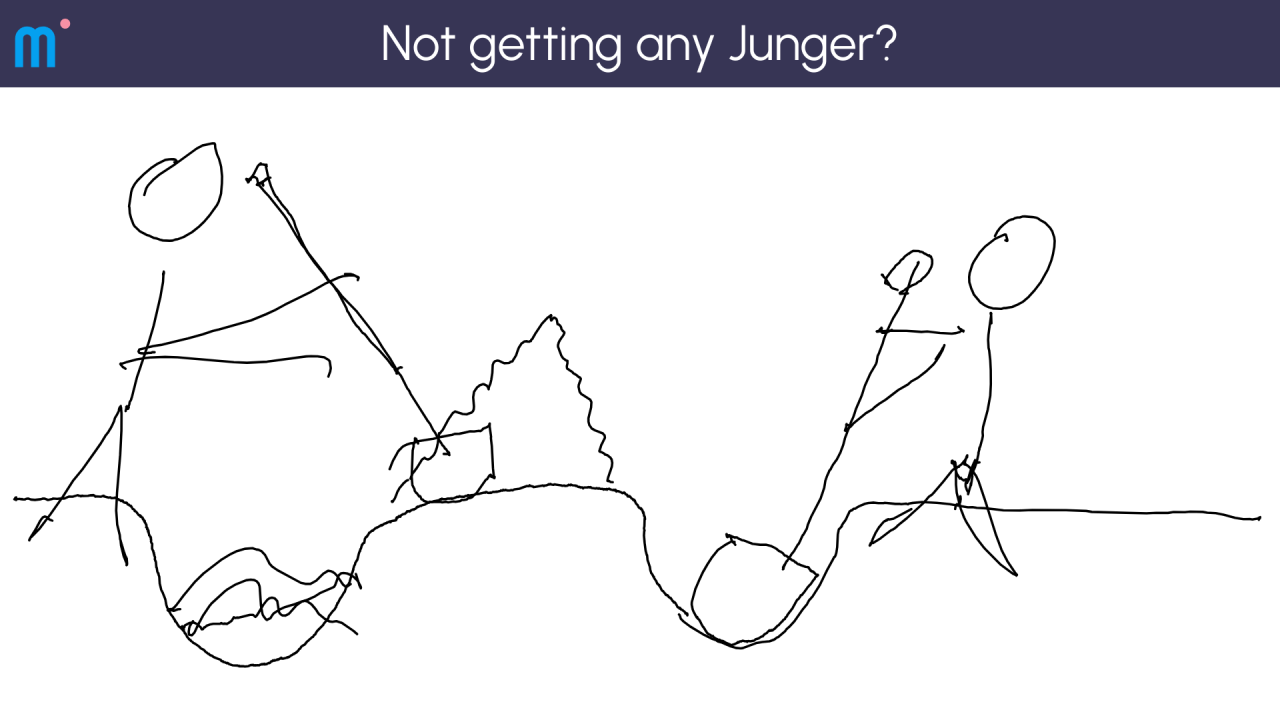
Some days your career can feel like a series of holes dug out and filled in.
Meetings happen. Teams deliver. Strategies evolve. Performance reviews are written.
Effort everywhere. Growth nowhere.
Carl Jung began what he later called his “confrontation with the unconscious” in his late 30s. He recorded the experience in what became The Red Book. He wasn’t trying to optimize productivity. He was trying to understand himself, especially the parts of him he didn’t control as much as he thought.
I can relate.
I got my start in a company built around the principle that software development is 90% people and 10% technology. I had the privilege of soaking in that culture, passing it on to generations of interns and new hires, and amplifying it for decades.
I thought that meant I’d been doing the inner work. I was wrong.
In my mid-50s, several crises hit at once. The kind that remove your ability to pretend everything is fine.
I realized that if I wanted to become who I said I wanted to be, something fundamental had to shift. I had gaps. I had defensive habits. I had rules running my life that I had never examined.
Like most of us, I couldn’t see how I was deceiving myself even while I was doing it.
***
Look over there! You’re watching two people, one digging holes, the other following behind and filling them in. Why do something so pointlessly effortful, you ask? We’re supposed to be a team of three, they explain. The person who puts the tree in the hole didn’t show up today.
In that metaphor, I was the tree that wasn’t being planted. I was the missing person. I was the whole team, having an adventure in missing the point.
As an A+ overachiever, I was wired to experience being wrong as loss. Mistakes felt like marks deducted. Which meant I unconsciously organized my behavior around avoiding them.
Jung wrote that until you make the unconscious conscious, it will direct your life and you will call it fate. It sounds mystical, but it’s really practical
If you don’t examine:
- how you react under stress
- how you handle disagreement
- what you avoid
- what you defend
- what approval you crave
…those patterns will quietly shape your leadership.
Conscious leadership asks for something harder than competence. It asks for self-confrontation. You can’t force it. Most of the struggle comes from resisting what’s already true.
It hurts like a hard workout. Your system wants to reset to familiar patterns. Like a thermostat snapping back to a comfortable temperature of moderate achievement and predictable reactions.
I started asking better questions.
Instead of: How do I avoid being wrong? I tried: What am I not seeing?
Instead of: How do I protect this image? I tried: What would growth require here?
Conscious leadership isn’t about learning more information. It’s about practicing different responses until they become natural.
I’ve never seen someone improve their game of catch by studying calculus, even though physics explains the trajectory. It’s not academic, it’s developmental.
Leadership works the same way.
You practice candor. You practice responsibility. You practice curiosity over certainty. You practice feeling discomfort instead of bypassing it.
Over time, the holes start containing trees. And even if it takes years, those years are going to pass anyway.
There’s nothing wrong with building valuable skills. But skills layered on top of unexamined patterns only amplify those patterns.
The cost of not doing the inner work is digging and filling forever.
It’s said that the best time to plant a tree is 30 years ago. I agree.
The second best time is right now.